
When Automation Makes the Customer Experience Worse
I am a huge fan of automation.
Used properly, it saves time, creates consistency and takes repetitive work away from people who could be doing something far more valuable.
We use marketing automation throughout The Last Hurdle, and I am always looking for sensible opportunities to automate more.
But there is an important word in there: sensible.
Automation isn’t something you set up, switch on and forget about. It still needs monitoring. It needs testing. It needs to account for the human beings on the receiving end of it.
Most importantly, it needs to produce the right result.
Good marketing automation uses technology to make repetitive processes more efficient without making the customer experience worse.
I was reminded of that recently by an experience with Sendible, the social media management platform we had been using for several years.
And, interestingly, the problem wasn’t Sendible’s people.
It was the automation around them.
A perfectly normal commercial decision
Sendible recently changed its packages and pricing.
For our business, the change represented a substantial increase in cost. The expanded package included additional functionality, but very little of it offered any practical additional value to us at this point in time.
That doesn’t make Sendible wrong.
They are developing their platform and growing their business. They have made a commercial decision about the direction they want to take their product and how they price it.
I made a commercial decision too.
The new proposition wasn’t right for us, so I decided to look elsewhere.
That’s business.
There were no hard feelings. We’d used the platform for several years and, if Sendible’s offering suits our requirements again in the future, I would certainly consider returning.
In fact, I particularly liked the way the person at Sendible handled the conversation when I explained why we were leaving.
They listened. They understood my position. Their response was friendly and professional.
Actually, I’d go further than that.
There was nothing tangible they could offer me. The new package wasn’t right for our business, and that wasn’t something the person dealing with me could change.
But they still managed to make me feel like a valued customer, even as I was leaving.
That’s good customer service.
Hats off to Sendible and, particularly, to the person dealing with me.
As far as I was concerned, we’d parted on perfectly good terms.
And then I received another email.
“I haven’t heard from you…”
The message told me they hadn’t heard from me and wanted to make sure I was good to go.
Except they had heard from me.
We’d had the conversation.
So I replied.
A slightly confused member of the Sendible team came back to me and, once again, the human interaction was lovely. We cleared things up and the conversation reached its natural conclusion for a second time.
Then I received another one.
Again, I was being told they hadn’t heard from me.
That was the point at which the penny dropped.
This was automation.
What had initially looked like one slightly misplaced follow-up was actually an automated sequence that hadn’t recognised that the conversation it was chasing had already taken place.
More than once.
And that’s when a very minor issue became rather more interesting from a marketing perspective.
Two unnecessary emails became six unnecessary communications
By the time I realised what was happening, two unnecessary automated communications had generated two responses from me and two further responses from Sendible’s team.
And then I had to send another message specifically asking to be removed from the loop.
Automation is supposed to reduce repetitive work.
This automation was generating it.
For me, this was a relatively minor irritation in what had otherwise been a very positive interaction.
But imagine the original conversation had involved something more serious.
Imagine the customer was already frustrated, disappointed or angry.
Imagine the person dealing with them had been slightly less understanding.
Or imagine your team had finally managed to resolve a difficult customer situation, only for an automated message to arrive suggesting that the conversation had never happened.
What does that do to the customer’s mood?
That’s where inappropriate automation stops being merely inefficient.
It can amplify friction that your people have already worked hard to resolve.

The humans were doing a better job than the automation
That’s what makes this particular example so interesting.
Every actual person I dealt with handled the situation well.
The human interaction made me feel heard.
The automated interaction repeatedly suggested I hadn’t been heard at all.
And that distinction is particularly noticeable when Sendible itself makes a point of saying “No bots here” when talking about its customer support.
To be clear, I don’t know what technology generated the messages I received. An automated support workflow isn’t necessarily a bot, so I’m certainly not suggesting that claim isn’t true.
But from a customer-experience perspective, there is still an important lesson.
If providing access to real human beings is part of your proposition, the automation surrounding those people needs to support that experience.
In this case, the people were great.
It was the automation around them that made the experience feel jarring.
Ironically, the reason the experience didn’t become particularly irritating was Sendible’s own person.
They were understanding, friendly and, quite frankly, lovely to deal with.
There was nothing they could offer that would change my decision, but they still left me feeling valued.
That’s the real Sendible win in this story.
Their automation created unnecessary friction.
Their person repeatedly removed it.
This isn’t an argument against automation
Quite the opposite.
I love good automation. I’ve written before about why automation isn’t about cutting corners, it’s about knowing where not to cut them
But good automation isn’t simply:
Send email one.
Wait two days.
Send email two.
Wait three days.
Send email three.
A properly designed automated journey also needs to understand when not to do something.
Has the customer replied?
Has somebody on the team responded?
Has their status changed?
Has the issue been resolved?
Has the purpose of the sequence already been achieved?
Sometimes the most important part of an automation isn’t what triggers the next action.
It’s what stops it.
Automation isn’t “set and forget”
I’ve seen the same problem in a much simpler form with another business whose services I actually needed.
Their automated system started sending me emails.
Blank emails.
Nothing in them.
Yet somewhere within the system, everything may have looked perfectly healthy.
Automation triggered.
Email generated.
Email sent.
Email delivered.
Job done.
Except it wasn’t.
Because the customer had received absolutely nothing of value.
Things break. Templates change. Integrations stop behaving as expected.
Something that worked perfectly when you built it may not be doing what you think it is doing today.
Automation still needs somebody to pay attention to it.
Successful delivery is not successful communication
There is a tendency with automation to focus on technical success.
Did it trigger?
Did it send?
Was it delivered?
Those are all useful things to know.
But they don’t answer the most important question:
Did the automation produce the right result?
The Sendible messages appear to have been delivered perfectly successfully.
The blank emails I received from another company were also successfully arriving in my inbox.
Technically, both automations were doing something.
That doesn’t mean they were communicating successfully.
An automated communication that successfully sends the wrong message, at the wrong time, to somebody who shouldn’t have received it isn’t successful automation.
It is simply efficiently delivered poor communication.
When did you last experience your own automation?
This is where businesses need to look beyond the workflow diagram and experience their automation as a customer does.
What is this automation supposed to achieve?
What happens when somebody replies?
What stops the sequence?
What happens if somebody within the business intervenes manually?
Could a customer receive a message that no longer makes sense because their circumstances have changed?
Are the templates still displaying correctly?
Do the links still work?
Is the information still current?
And perhaps most importantly:
Would you be happy to receive this communication in the circumstances in which your customer is receiving it?
If the answer is no, it doesn’t really matter that your automation platform says everything worked.
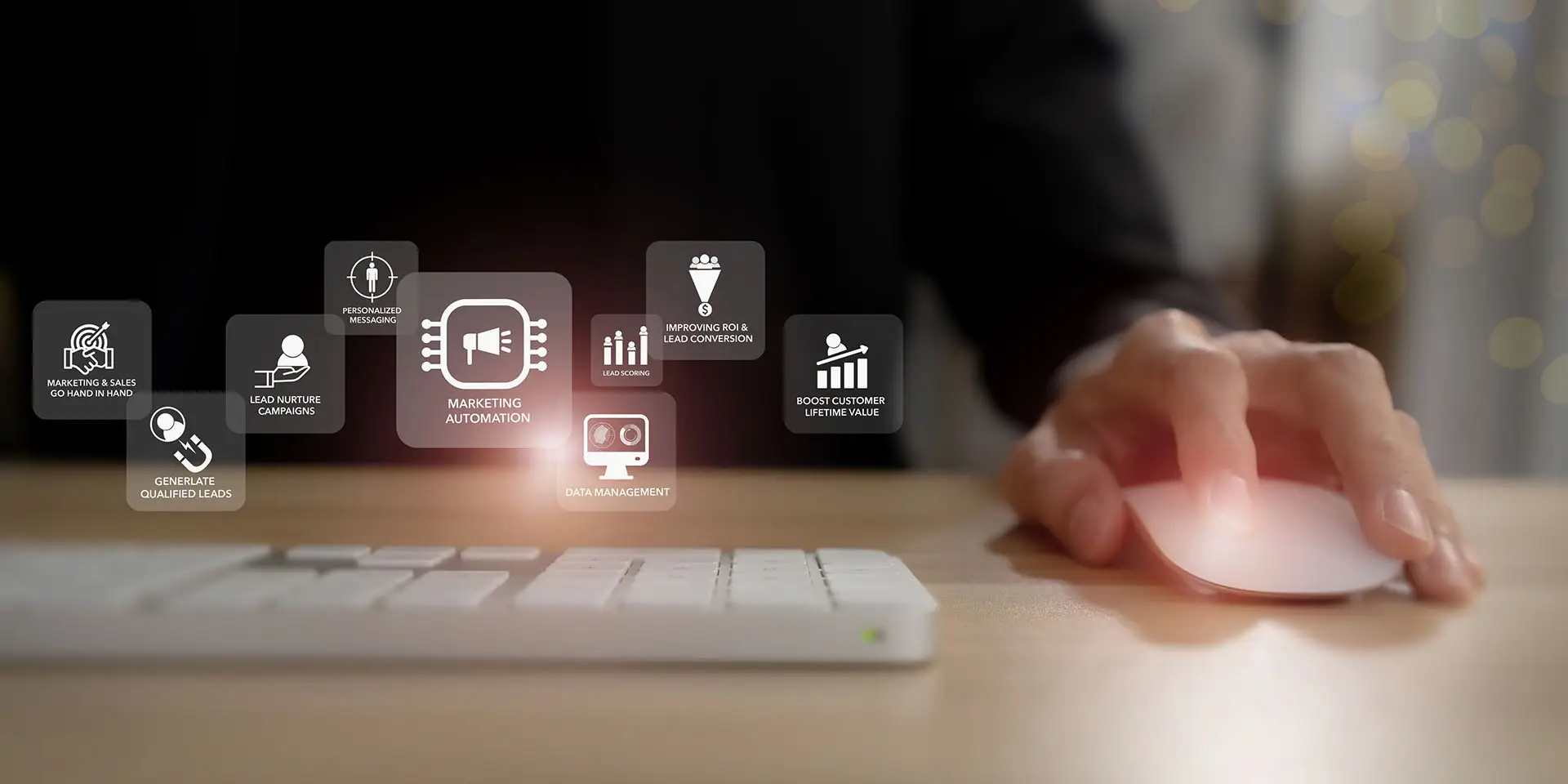
Automation scales efficiency. It can scale mistakes just as effectively.
Poor automation doesn’t have to cause some spectacular customer-service disaster to be a problem.
Often, it creates little bits of unnecessary friction.
An irrelevant follow-up.
A message that ignores the conversation you’ve just had.
A sequence that doesn’t know when to stop.
A blank email.
One customer might roll their eyes and move on.
But automation scales. If the process is wrong, you’re scaling the problem too.
And that brings us back to something we talk about constantly at The Last Hurdle: Marketing Clarity.
Automation doesn’t get an exemption from that simply because it’s technology.
What are you trying to achieve?
Who is the communication for?
What should happen as a result?
And is the process you’ve built actually helping you achieve it?
If an automation saves your team time but frustrates your customers, that’s worth knowing.
If it successfully delivers emails that shouldn’t have been sent, that’s worth knowing.
And if it creates more work for your customer and your own team, something has gone wrong regardless of how beautifully the workflow itself is functioning.
The technology isn’t the strategy. The outcome is what matters.
So yes, automate.
Automate repetitive work. Automate where it saves time. Automate where it makes your customer experience quicker, easier or more consistent.
I’m certainly going to continue doing exactly that.
But don’t confuse “we’ve automated it” with “we no longer need to pay attention to it.”
Because the measure of good automation isn’t simply whether it ran successfully.
It’s whether it produced a positive result for the business and the human being on the other end of it.
Part of the Marketing Clarity Series
This article is part of the Marketing Clarity series from The Last Hurdle, exploring the thinking behind clearer, more effective marketing.
Automation can save time, improve consistency and make marketing processes more efficient, but automation itself is not the result. The important questions are what the automation is there to achieve, whether it is improving the experience for the person on the receiving end, what happens when circumstances change, and whether the process is actually producing the outcome you intended.
Marketing Clarity is about asking those questions across your whole marketing mix, looking beyond activity, tools and technology to understand what is genuinely helping your business achieve its goals.
Explore the full Marketing Clarity series
Latest Marketing Insights

Social Media Has Nowhere Left to Hide


Are AI Citations the New Vanity Metric