Strategy Pivot: Stop Fighting the Instagram Feed
If the main feed is becoming saturated, the worst thing you can do is double down on trying to win inside it.
Instead, step slightly outside of it.
Shift your focus to Stories.
Stories sit at the very top of the app. They are the first thing people see, and they operate differently to the main feed.
Right now, they offer:
- Immediate visibility
- Less competition
- Faster, more frequent touchpoints
- A more personal connection with your audience
And in practical terms:
You are currently far more likely to be seen in Stories than in the main feed.
Why Stories Matter More Than Ever
Stories are not just a workaround. They represent a different type of presence.
Feed content is slower and more polished. Stories are quicker, more human, and more consistent.
They allow you to show up in ways that build familiarity over time.
And that familiarity drives:
Not from one post.
From repeated, light-touch visibility.
What This Looks Like in Practice
This is where the mindset shift happens.
Instead of asking:
“What should we post this week?”
Start asking:
“How are we showing up today?”
That might look like:
- A quick project update
- A client win
- A behind-the-scenes moment
- A thought or observation from your day
Less production.
More presence.
More consistency over time.
So… Is Organic Dead?
No.
But it is no longer the engine it once was.
Then | Now |
Organic = primary visibility | Organic = supporting visibility |
Followers = reach | Followers = potential reach |
Posting = distribution | Posting = chance of distribution |
That’s the shift.
And it’s a big one.
What Smart Businesses Are Doing Now
The businesses adapting best are not abandoning Instagram, but they are changing how they use it.
They are:
- Using feed posts for credibility, not relying on them for reach
- Showing up consistently in Stories to maintain visibility
- Building presence across multiple platforms to reduce dependency
It’s not about doing more.
It’s about using the platform differently.
The Real Risk for Instagram
If the balance tips too far, the risk isn’t just frustration.
It’s disengagement.
- Users scroll less
- Engagement drops
- Content performance declines
And when that happens, the platform loses value for everyone, including advertisers.
That is the line Instagram needs to manage carefully.
The Last Word
Instagram isn’t dead.
But it is changing, quickly.
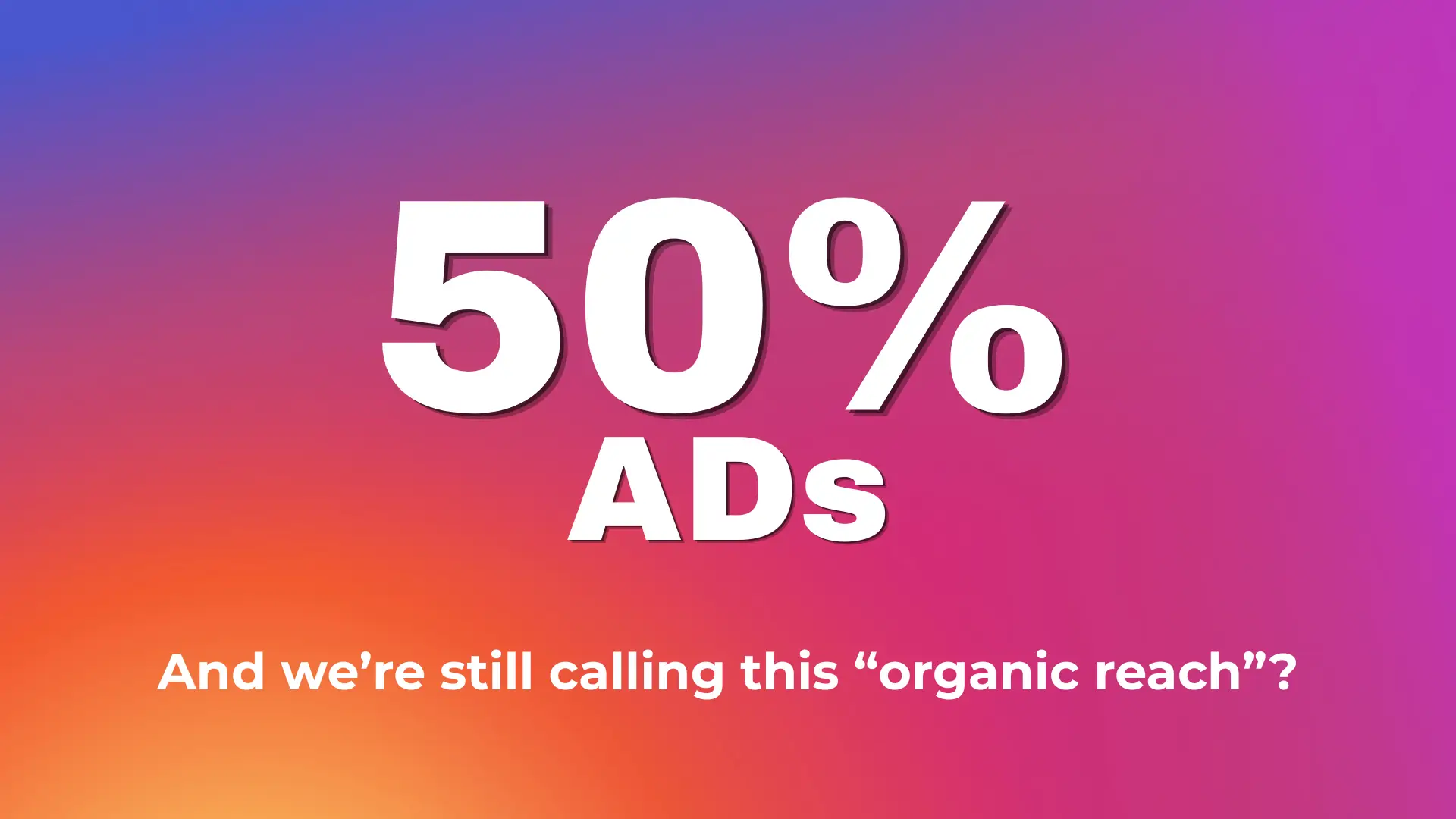
And if half your feed is ads, then the real question is no longer:
“Why isn’t my content performing?”
It’s:
“Am I still playing the game the right way?”
Right now, the smartest move isn’t to fight the feed.
It’s to step slightly above it.
👉 And right now, that’s Stories.