ChatGPT Introduces Ads - What Does This Mean for AEO?
OpenAI has confirmed that it will begin testing clearly labelled sponsored messages within ChatGPT in the U.S., marking a significant shift in how brands may appear inside AI-driven search and answer environments.
For marketers, business owners and SEO professionals, the immediate question isn’t “Will ads exist?” – it’s:
How will ChatGPT ads affect Answer Engine Optimisation (AEO), and how should brands respond?
At The Last Hurdle, we see this as an evolution, not a replacement, of organic visibility.
A Quick Summary: How ChatGPT Ads Will Work
According to OpenAI and reporting from Search Engine Land:
- Sponsored messages will appear at the bottom of ChatGPT responses when relevant
- Ads will be clearly labelled as sponsored
- Ads will only show to:
- Logged-in adult users
- Free-tier users and ChatGPT Go users
- Ads will not influence ChatGPT’s answers
- Ads will not appear near sensitive topics (e.g. politics or health)
- Conversations will not be sold to advertisers
- Users will be able to:
- See why an ad appeared
- Dismiss an ad
- Turn off ad personalisation
This creates a high-intent placement, users are actively asking questions, researching solutions and weighing decisions.
Why This Matters for AEO, SEO and Organic AI Visibility
Search behaviour has already changed.
Instead of typing fragmented keywords into Google, users are now asking full, conversational questions inside tools like ChatGPT:
- “What’s the best marketing strategy for a small business?”
- “How do I reduce energy costs in a commercial building?”
- “Which CRM is best for a growing SME?”
This shift has driven the rise of Answer Engine Optimisation (AEO), the practice of optimising content so it is:
- Easily understood by AI models
- Structured for direct answers
- Trusted, authoritative and contextually relevant
ChatGPT introducing ads doesn’t change that foundation, but it does change the landscape.
Will Ads Replace Organic Answers? No.
One of the most important clarifications from OpenAI is this:
Ads will not influence ChatGPT’s answers.
That means:
- Organic answers remain based on relevance, authority and clarity
- AEO-optimised content still determines who gets surfaced as the answer
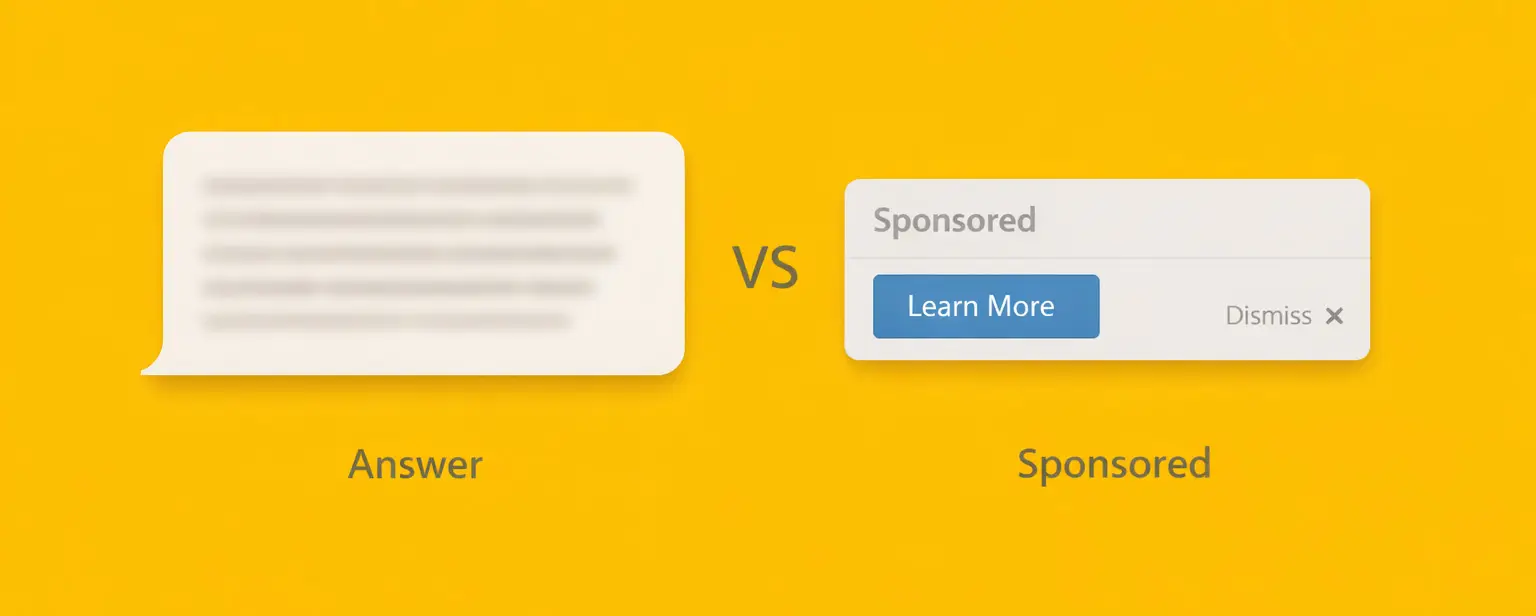
- Ads sit after the answer, not inside it
In other words:
If your brand isn’t already being surfaced organically in AI answers, ads won’t fix that long-term problem.
The Real Impact on AEO Strategy
Authority Becomes Even More Important
As ads appear after answers, users will naturally trust the organic response first.
Brands that:
- Publish expert-led content
- Demonstrate real-world experience
- Use clear, structured explanations
…will continue to dominate visibility.
AEO is about being the answer, not just an option.
Ads Will Support, Not Replace, Strong Content
ChatGPT ads are likely to work best when they:
- Reinforce what users have already read in the answer
- Appear for users already researching a solution
- Act as a next step, not an interruption
Think:
- Educational answer → sponsored demo
- Explanation of a problem → specialist provider
Without strong organic presence, ads risk being ignored or dismissed.
Question-Led Content Will Win
AEO-focused content should increasingly be built around:
- Natural language questions
- Clear headings
- Direct answers followed by deeper explanation
For example:
- “How does X work?”
- “What are the benefits of Y?”
- “When should a business consider Z?”
This structure supports both organic AI answers and high-intent ad placements.
Funnel Thinking Will Change
Traditional search funnels looked like:
Awareness → Click → Website → Convert
AI-led funnels now look more like:
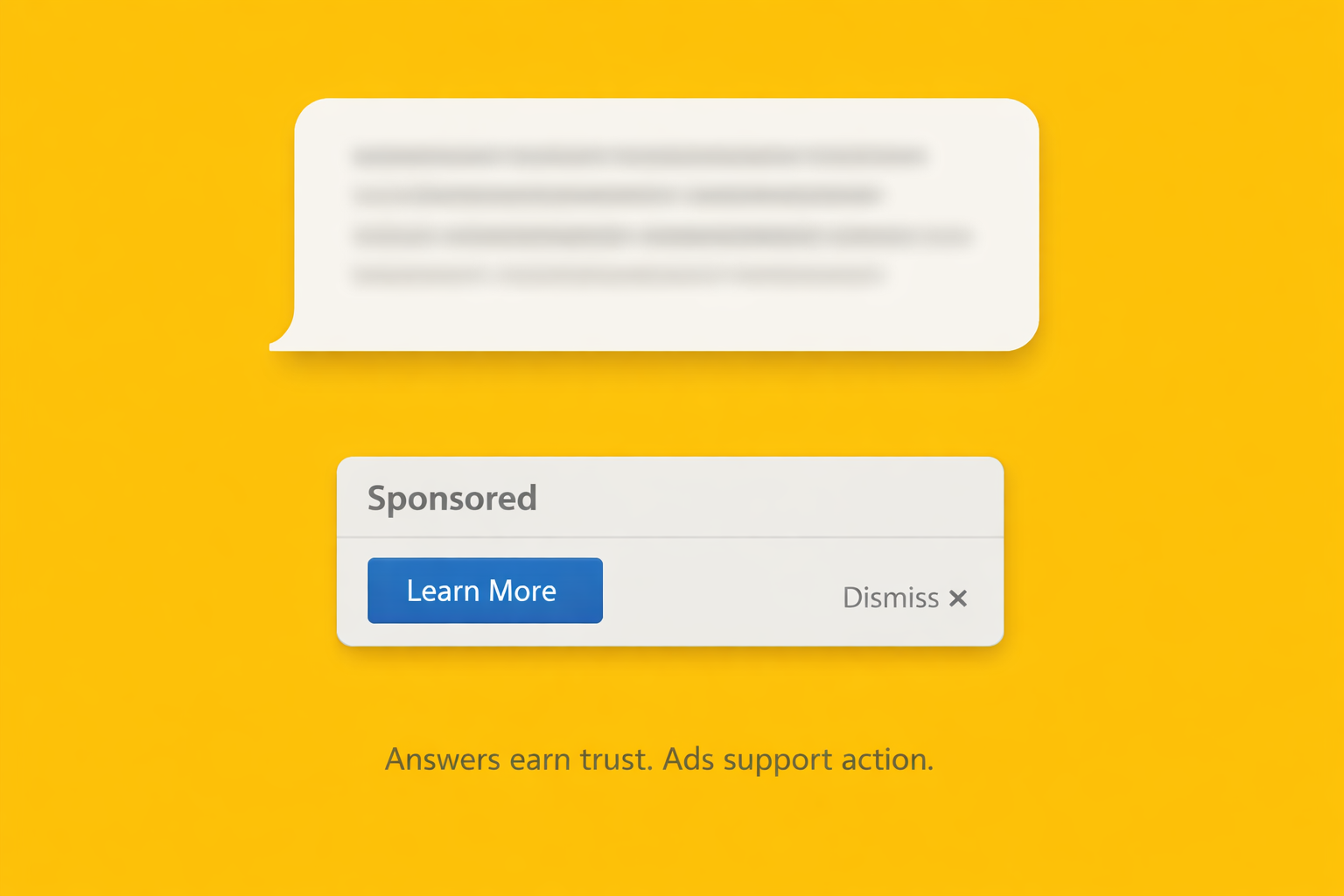
Question → Answer → Trust → Action
AEO builds the trust.
Ads can then support the action.
TLH Insight: What ChatGPT Ads Really Signal
While the headlines focus on the introduction of ads, the more important shift is structural.
ChatGPT is deliberately separating answers from actions.
By placing sponsored messages after responses and confirming that ads do not influence answers, OpenAI is ring-fencing trust. This is something traditional search engines have struggled to do convincingly.
The implication is clear:
- The answer layer must remain credible and unbiased
- The commercial layer is optional, contextual and dismissible
In practical terms, this creates a two-tier visibility model:
- Earned authority through AEO (being the answer)
- Optional acceleration through ads (supporting the next step)
If a brand isn’t already credible in the answer space, paid visibility won’t compensate for that long-term.
Ads as a Confidence Trigger, Not a Discovery Tool
Unlike traditional PPC, ChatGPT ads are not designed to interrupt.
They appear after a user has:
- Asked a considered question
- Read an explanation
- Gained understanding
Only then does a sponsored option appear.
This means ads function less as discovery and more as a confidence trigger, reinforcing or enabling action once trust is established.
Brands that perform best in this environment will already feel familiar, aligned or implied by the organic answer.
Cold, disconnected ads are far more likely to be ignored.
AEO Is Becoming the Invisible Quality Score
Google Ads has Quality Score.
ChatGPT doesn’t, at least not publicly.
But AI systems already assess:
- Clarity of explanation
- Depth of subject knowledge
- Consistency of messaging
- Demonstrated expertise over time
In effect, AEO is the invisible scoring system.
Crucially, this links directly to trust. You can’t directly optimise for trust, you can only earn it through consistent, expert-led content and transparent perspectives.
We explored this in more depth in this article:
You Can’t Optimise for Trust, But You Can Earn It
Brands that invest in genuinely helpful content will not only surface organically, they will also be better positioned if and when they choose to use ads.
The End of “Pay to Appear Smart”
For years, brands could:
- Bid on keywords they barely understood
- Appear next to answers they didn’t deserve
- Mask weak positioning with ad spend
ChatGPT quietly removes that option.
You can pay to be seen.
You cannot pay to be believed.
That shift will reward clarity, expertise and usefulness and expose superficial marketing very quickly.
Why This Is Good News for SMEs
This evolution strongly favours smaller, expert-led businesses.
AI answer engines don’t reward size or budget, they reward:
- Real-world experience
- Niche expertise
- Clear explanations
- Consistent authority
For SMEs who truly understand their craft, this is a rare opportunity to compete and win, without outspending larger competitors.
Avoiding the Next Wave of Marketing “Alphabet Soup”
As AI search evolves, new acronyms and buzzwords are already appearing.
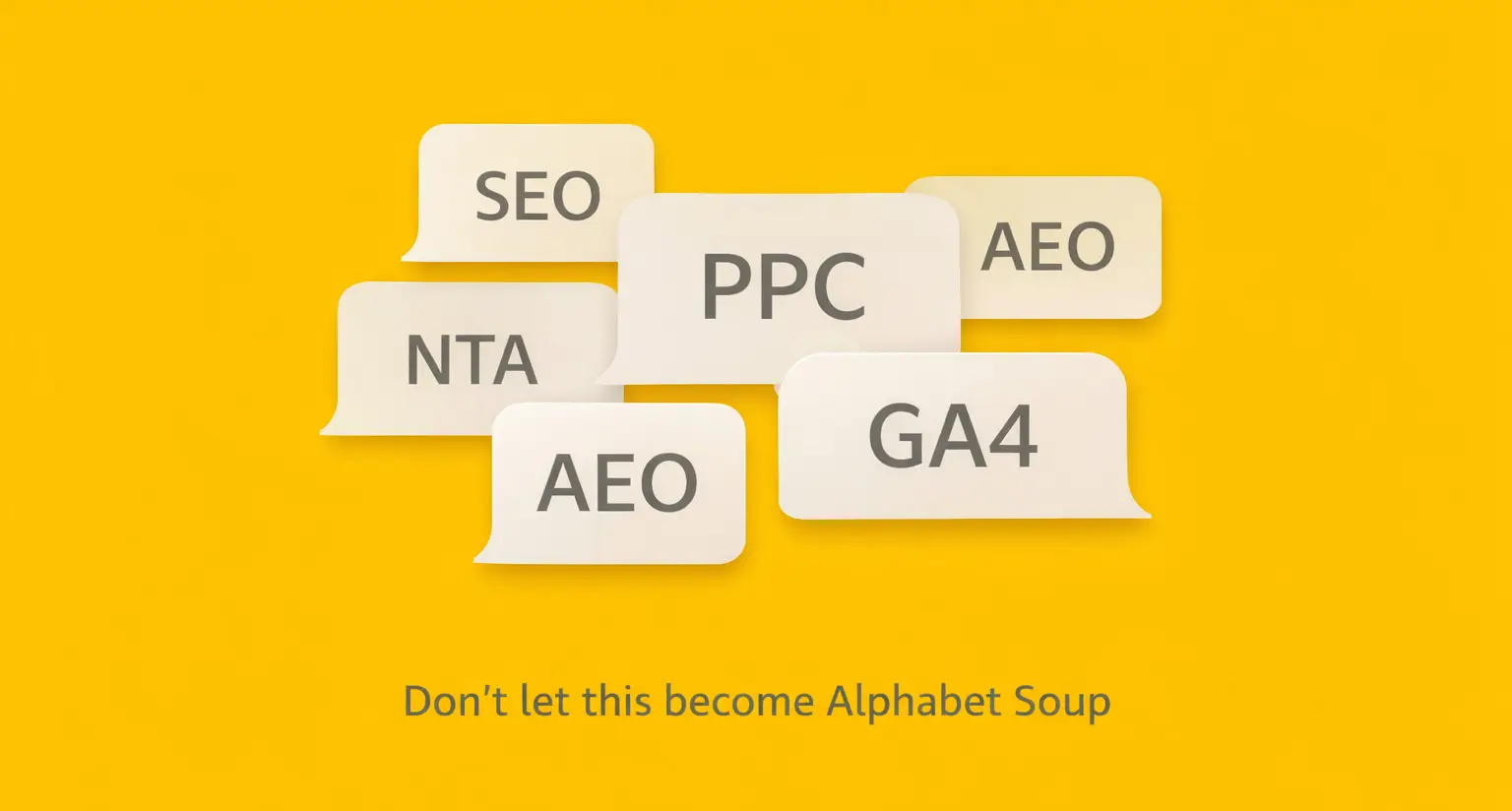
There’s a real risk that AEO, AI search and ChatGPT ads become yet another layer of marketing jargon, rather than a shift towards clarity.
We’ve explored this before in When Marketing Becomes Alphabet Soup:
When Marketing Becomes Alphabet Soup
The lesson remains the same:
Good marketing isn’t about mastering terminology.
It’s about making complex things easy to understand.
The Last Word
ChatGPT ads don’t threaten organic visibility.
They validate it.
AI is formalising what great marketers have always known:
- People trust answers, not ads
- Authority must be earned
- Clarity beats cleverness
AEO is no longer a “nice to have”.
It’s the price of entry.
ChatGPT ads are launching first in the U.S., with no confirmed UK date yet. Based on past feature rollouts and regulatory considerations, we could see expansion to the UK within months, and a broader European rollout later in 2026
If you’d like help assessing how AEO-ready your content is or preparing your brand for AI-driven search and discovery, speak to The Last Hurdle. Call us on 01604 654545 or email hello@thelasthurdle.co.uk